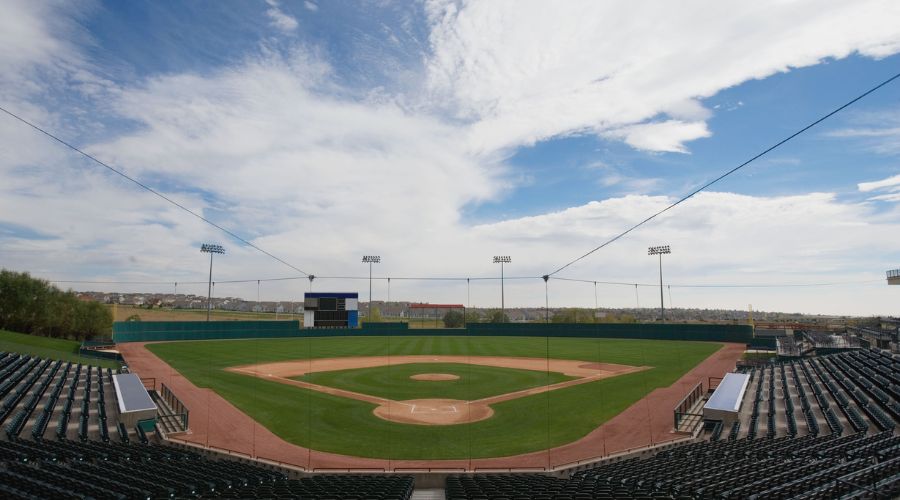
Stadium Drone Defence: A GC’s Guide to Private Airspace Protection and Kinetic Drone Capture
As a general contractor (GC), overseeing a large-scale sports complex or open-air build is already a high-pressure job. You are tracking tight timelines, managing project costs, and coordinating a small army of subcontractors. But lately, contractors are facing a brand-new headache: rogue drones.
Whether it is a clueless hobbyist trying to film a game or a more serious security threat, unauthorized drones are a huge liability. In fact, the FAA receives well over 100 reports of unauthorized drone sightings near restricted airspaces and critical infrastructure every single month.
Welcome to the new reality of facility airspace security. If you are the project manager for an open-air venue, you don’t need military jargon or illegal gadgets to solve this problem. You need a practical, reliable way to keep the sky above your site safe.
This guide is your roadmap to understanding “passive kinetic defence”, which is really just a simple, structural way of saying custom, high-tensile netting.
Key Takeaways:
- The Legal Trap: Why high-tech electronic jammers are illegal and risky for commercial builds.
- A Foolproof Barrier: How a physical drone barrier provides a safe, legal, and permanent shield.
- Smart Integration: The secret to installing anti-drone netting systems without ruining your timeline.
- One Team, Zero Blame: Why choosing a single partner for design, supply, and installation saves you from the dreaded “blame game.”
Tip from the field: Treat your airspace like you treat your foundation. Plan for overhead netting on day one of the design phase, not as a panicked afterthought when the steel is already going up.
Why Electronic Jammers Fail at Private Airspace Protection
Picture this: You are halfway through a major stadium project. The construction is moving along on schedule and your key milestones are being reached. Then, during a site walkthrough, the owner asks a question that wasn’t in the original contract: how do you plan to keep rogue drones from entering the airspace?
Naturally, you hop online to do some research. Suddenly, you are staring at a wall of military websites selling signal jammers, laser systems, and high-tech radars. It all sounds incredibly impressive. But grab a coffee, because we need to talk about the hard truth. Those active, high-tech systems are a massive trap for general contractors.
Why? First, there is the legal hard-stop. Scrambling a drone’s signal is highly illegal for commercial use. In Canada, Innovation, Science and Economic Development Canada (ISED) strictly prohibits civilian businesses from using jamming equipment. (Read the official ISED advisory here). Turn one of those on, and you aren’t just blocking a drone, you risk interfering with local emergency responders, cell towers, and even commercial flight paths.
But even if it were legal, the technology itself is a money pit. Active defence systems rely on complex software to identify and hack specific radio frequencies. The problem? Drones are evolving faster than those software libraries can update. Today’s commercial drones can fly fully autonomous, pre-programmed routes using internal mapping. Since they aren’t relying on a live radio signal from a pilot, an electronic jammer has nothing to intercept. You are essentially buying a high-priced digital gadget to fight a constantly changing digital threat.
Which brings us to the real question for a general contractor: Are you willing to bet your project’s margin and reputation on a piece of software that might be obsolete before the concrete even cures?
If you make that bet, you are introducing a massive, uncontrollable variable into your project. In construction, accountability always flows uphill to the GC. When that system is inevitably bypassed by a simple autonomous drone, the owner won’t care about the software’s technical limitations. Your firm is the one left holding the liability for a compromised airspace.
Tip from the field: When a client brings up drone defence, immediately steer the conversation away from software and back to structure. Remind them that the safest, most reliable way to protect a facility is with a physical barrier you can actually see and trust.
What is Kinetic Drone Capture? The Shift to Drone-Proof Sports Netting
Let’s strip away the military jargon. ‘Passive kinetic defence’ sounds like something out of a sci-fi movie. But in the construction world, it simply means stopping a moving object with a physical, energy-absorbing barrier. Specifically, custom, high-tensile commercial drone netting. Think of passive kinetic netting like a structural airbag for your facility. It’s always on, requires zero power, and automatically absorbs the impact when things go wrong.
In an open-air stadium, your biggest threat isn’t just surveillance; it’s gravity. If an unauthorized drone loses power over a crowd of 10,000 spectators, you are dealing with a catastrophic kinetic drop hazard. Netting is the only solution that safely catches the threat before it reaches the seats.
When you’re submitting a bid for an open-air venue, factoring in structural drone protection upfront prevents massive change orders and liability issues later. You need something that works 24/7 without a software update. Because you cannot legally or effectively jam drones around civilian infrastructure, physical barriers have emerged as the only reliable, regulatory-compliant defence.
Tip from the field: When specifying netting for drones, make sure the mesh size is small enough to catch commercial quadcopters, but open enough to prevent massive wind or ice loading on your structure.
How to Integrate Drone-Proof Sports Netting into Stadium Designs
You already know that adding a massive netting system introduces serious variables to your build. You aren’t just hanging a curtain. You are dealing with structural wind loads (like those defined by the National Building Code of Canada (NBCC)), ice accumulation, and strict aesthetic requirements.
But structural integrity is only half the battle. In an open-air venue, spectator visibility is everything. You can’t hand over a facility with a drone net that obstructs the view of the field or casts distracting shadows under the stadium lights. This is where material selection becomes critical. By specifying a low-visibility Dyneema® netting system, you can protect the architect’s aesthetic vision and the fan experience, all while securing the airspace with military-grade strength.
A well-executed Stadium Drone Defense system should be virtually invisible to fans in the seats — the netting does its job overhead while the game remains the only thing commanding attention on the ground.
But specifying the right material is only step one. Actually integrating a massive, tensioned canopy into an open-air build is where multi-trade coordination usually falls apart. When you piece this scope of work out to different subcontractors, the gaps in communication become your liability:
- The Structural Engineer miscalculates the dynamic wind and ice loads because they aren’t used to working with specialized netting materials.
- The Fabricator supplies a mesh that stretches or degrades under tension, completely ruining those initial load calculations.
- The Riggers get to the site and can’t decipher the complex structural attachment points, leading to unauthorized field modifications and massive delays.
That is exactly why piecemealing a drone defence canopy is a recipe for change orders. To protect your margin and your timeline, you need a single-source partner who handles the structural engineering, the custom fabrication, and the installation under one roof. When one team owns the entire lifecycle of the system, there is zero finger-pointing and zero guesswork on site.
Tip from the field: You don’t have to sacrifice aesthetics for safety. Utilizing ultra-strong, thin-profile netting materials ensures the sky remains the focal point, not the barrier protecting it.
Choosing the Right Partner for Stadium Drone Defence Installation
When you add a massive anti-drone canopy to an open-air build, the biggest risk to your timeline isn’t the netting itself; it’s the coordination. If the structural attachments fail or the net sags under tension, you are left with a compromised airspace and subcontractors pointing fingers. The engineer blames the fabricator, and the fabricator blames the install crew.
At Netex, we eliminate this coordination gap. We don’t just ship you a pallet of Dyneema and wish you luck. Because we handle the custom structural engineering, the specialized fabrication, and the complex rigging all under one roof, we ensure the system performs exactly as designed from day one.
You don’t have time to babysit multiple new trades just to secure the airspace. We give you one point of contact, one timeline, and one fully accountable team.
Tip from the field: Adding counter-drone infrastructure shouldn’t mean adding three new subcontractors to your site. Always look for a turnkey provider who owns the entire lifecycle of the system.
Conclusion: Securing Your Build with Reliable Counter-Drone Infrastructure
Protecting an open-air venue from drones doesn’t have to be a sci-fi nightmare. As we’ve explored, active electronic defences are a massive legal risk and a logistical trap for general contractors. The simplest, most effective way to secure your site is through physical, high-tensile netting. It stops the threat in its tracks, naturally and legally, every single time.
By treating your netting, lighting, and structural needs as one integrated project, you eliminate vendor exhaustion. You get to hand over a safe, beautiful facility to your client on time and on budget. No finger-pointing. No delays. Just a job well done.
Your Next Step: If you have a stadium, amphitheatre, or sports park on the horizon that requires overhead protection, bring us to the table right away. Involving an integrated partner early in the structural design phase ensures the wind loads, lighting integration, and attachment points are perfect before the first shovel ever hits the dirt.
Tip from the field: When reviewing bids for complex overhead netting, always ask to see high-resolution photos of the vendor’s past installations. True craftsmanship hides in the details of the rigging, the tension lines, and how clean the final canopy looks against the sky.
Frequently Asked Questions (FAQ)
What is the most reliable method for stadium drone defence?
The most reliable and legally compliant method for stadium drone defence is the installation of physical, high-tensile netting. Unlike electronic jammers, which are illegal for civilian use and often rendered useless by autonomous drones, a physical net provides constant, unhackable protection.
How does kinetic drone capture work?
Kinetic drone capture involves using a physical, energy-absorbing barrier, like a structural netting canopy, to safely catch and contain a drone in flight. It stops the forward momentum of the drone and prevents it from becoming a dangerous drop-hazard over crowds or infrastructure.
Are signal jammers legal for private airspace protection?
No. In both Canada and the United States, federal communications authorities (ISED and the FCC, respectively) strictly prohibit the civilian use of signal jamming equipment. Attempting to jam a drone’s signal can interfere with emergency communications, cell networks, and aircraft, resulting in severe legal and financial penalties.
What material is used for drone-proof sports netting?
Top-tier drone-proof sports netting is typically engineered from ultra-high-molecular-weight polyethylene, such as Dyneema®. This material is incredibly strong and lightweight, allowing for a tight mesh gauge that catches commercial drones while maintaining a thin profile that doesn’t obstruct spectator visibility or create massive wind loads.
About the Author:
Mark Wilson is the founder of Netex Netting (Netex Canada Netting Inc.), a global leader in golf and baseball netting systems. With 47+ years of net-building expertise, he pioneered low-drag Dyneema® golf nets and designed integrated pole, lighting, and turf solutions. Netex delivers precision installations worldwide and stands behind them with industry-leading warranties.